Winter Tyre Rules in Germany: What Drivers Must Know in 2026
Driving during winter in Germany requires more than experience and caution, it requires legal compliance and proper vehicle preparation. Every year, thousands of drivers face fines, TÜV issues, or insurance problems because they misunderstand winter tyre regulations (Winterreifen Pflicht Deutschland). In 2026, these rules remain strict and closely monitored.
This guide explains the legal requirements, safety implications, and how a professional Reifenservice Werkstatt can help you stay compliant and safe throughout the winter season.
Understanding the Winter Tyre Obligation in Germany (Winterreifen Pflicht Deutschland)
Germany follows a situational winter tyre obligation, not a fixed seasonal rule. This is known as Winterreifen Gesetz.
Winter tyres are mandatory when winter road conditions exist, including:
- Snow
- Ice
- Slush
- Frost
If you drive under these conditions without proper tyres, you are violating German traffic law, even if it is outside traditional winter months.
This is why many drivers rely on a professional tyre inspection service (professioneller Reifenservice Deutschland) to avoid legal risks.
What Qualifies as a Legal Winter Tyre? (Alpine Symbol Reifen)
Not every tyre labelled “winter” is legally acceptable.
Legal requirements for winter tyres:
- Alpine symbol (three‑peak mountain snowflake)
- Correct load and speed rating
- No visible damage
- Suitable tread depth
Older tyres marked only with “M+S” are no longer sufficient for new installations. A certified tyre replacement service (Reifenwechsel Werkstatt) ensures your vehicle meets all current legal standards.
Minimum Tread Depth for Winter Tyres (Winterreifen Mindestprofiltiefe)
The legal minimum tread depth in Germany is:
- 1.6 mm
However, for winter driving, safety experts and TÜV inspectors strongly recommend:
- At least 4 mm
Why tread depth matters:
- Better grip on snow and ice
- Shorter braking distance
- Improved handling in emergency situations
Low tread depth is one of the most common reasons vehicles fail inspections or lose insurance protection after accidents. Regular checks by Reifenservice Deutschland significantly reduce this risk.
Fines, Penalties, and Insurance Risks (Winterreifen Strafe)
Driving without proper winter tyres can lead to:
- Fines
- Penalty points in Flensburg
- Partial or full insurance claim rejection
Even worse:
If you are involved in an accident while using incorrect tyres, you may be held partially liable, even if you did not cause the accident.
This is why many drivers schedule seasonal checks at a professional car workshop service in Germany (Autowerkstatt Service) before winter conditions begin.
Why Professional Tyre Services Matter in Winter
A professional tyre repair and replacement service offers far more than just changing tyres.
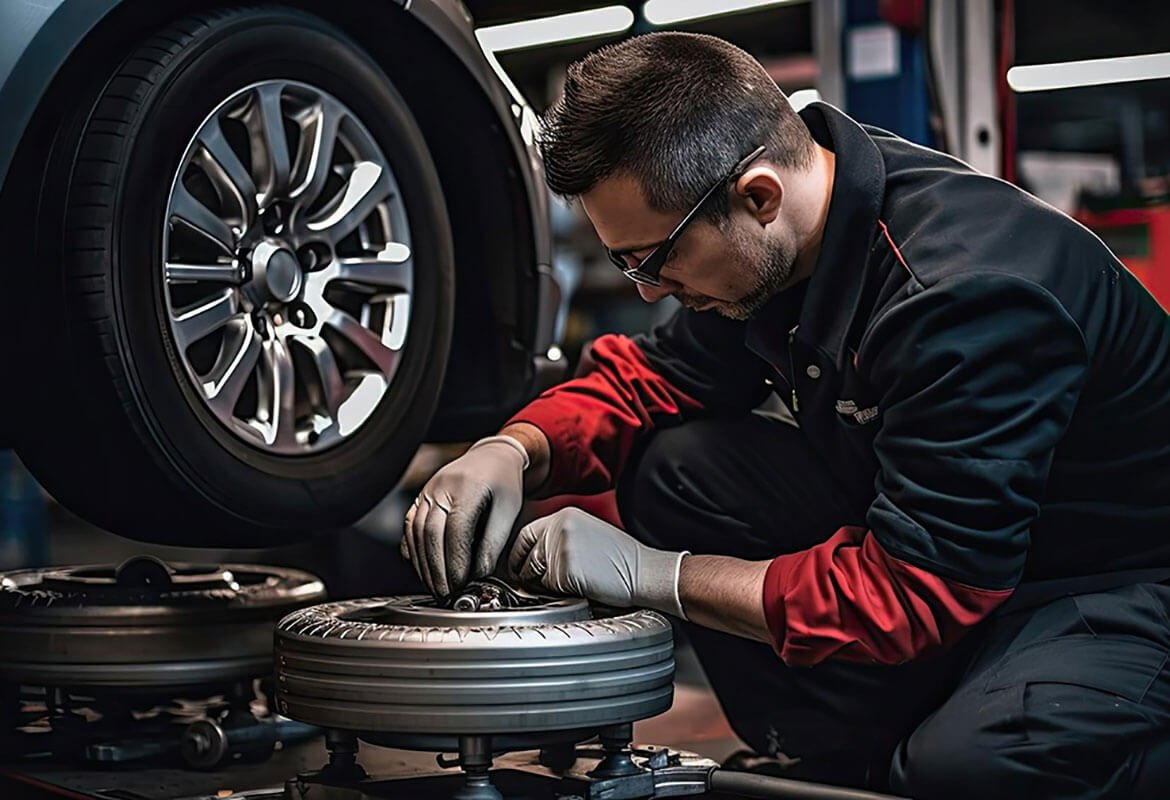
A winter tyre service typically includes:
- Tread depth measurement
- Tyre pressure adjustment (Reifendruck prüfen)
- Wheel balancing
- Visual damage inspection
- Compliance with TÜV and insurance requirements
These checks ensure maximum road grip, improved handling, and longer tyre life, exactly what GP TEAM’s tyre services are designed to deliver.
The Role of Tyre Pressure in Winter Safety (Reifendruck prüfen)
Cold temperatures cause tyre pressure to drop naturally. Under‑inflated tyres can:
- Reduce steering control
- Increase braking distance
- Increase fuel consumption
- Accelerate tyre wear
Experts recommend checking tyre pressure every 2-3 weeks in winter. Many drivers choose a Reifenservice Werkstatt for accurate pressure adjustment and safety verification.
Wheel Alignment and Balance: Often Overlooked, Always Important
Winter roads, potholes, and icy conditions can affect wheel alignment. Poor alignment leads to:
- Uneven tyre wear
- Steering instability
- Reduced driving comfort
A professional wheel alignment service (Achsvermessung Service) ensures tyres wear evenly and perform optimally throughout the winter season.
How a Workshop Service Supports Winter Safety
Winter tyre compliance is not only about tyres. A certified automotive workshop service (Autowerkstatt für Fahrzeugdiagnose) checks related safety components, including:
- Suspension
- Brakes
- Steering system
Combining tyre services with a full vehicle inspection provides the highest level of winter safety and reliability.
When Should You Check or Replace Winter Tyres?
You should schedule a tyre inspection if:
- Tread depth is below 4 mm
- Tyres are older than 6-8 years
- You notice vibrations or instability
- Winter conditions are approaching
A quick tyre replacement service with proper fitting (Reifenmontage Service) ensures your vehicle is ready before weather conditions become dangerous.
Why Preventive Tyre Maintenance Saves Money
Ignoring tyre condition often leads to:
- Premature tyre replacement
- Increased fuel costs
- TÜV failures
- Insurance complications
Preventive maintenance through a professional tyre maintenance service reduces long‑term costs and improves overall driving safety.
Stay Legal, Stay Safe
Winter tyre regulations in Germany exist for one reason: safety. Understanding the law and maintaining your tyres properly protects:
- You
- Your passengers
- Other road users
By relying on a professional tyre repair and workshop service, drivers can ensure legal compliance, improved performance, and peace of mind throughout winter.